
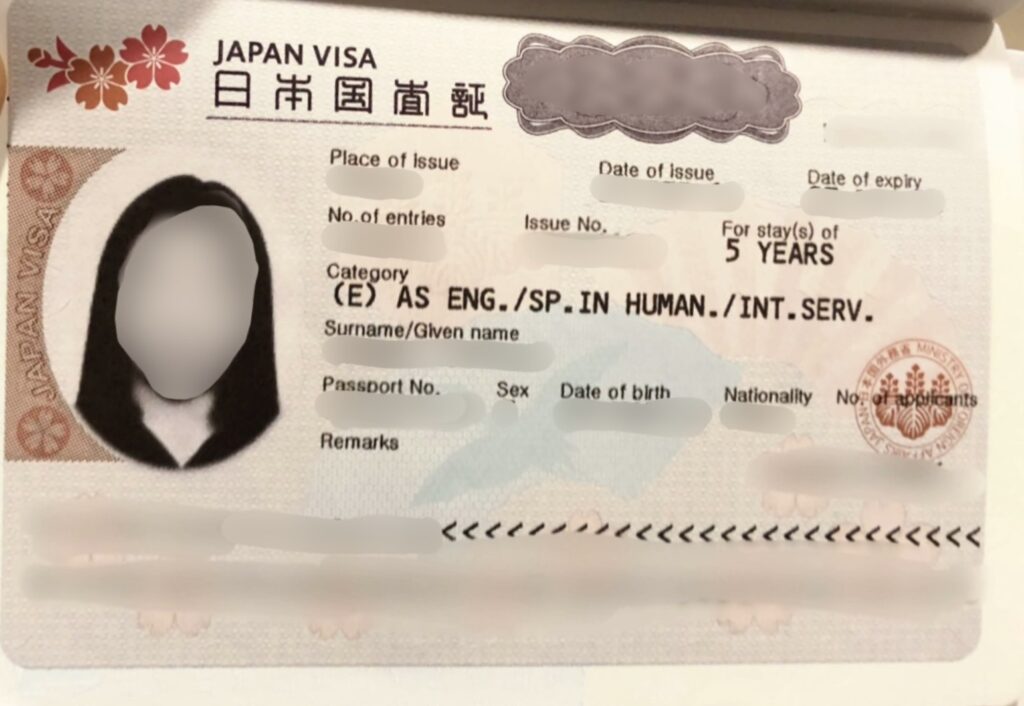
From Working Holiday to Work Visa in Japan – Can I Switch?
If you’re enjoying the life in Japan on a Working holiday visa and thinking about staying longer with a proper job, the big question is: Can I switch from a Working Holiday visa to a Work Visa in Japan without leaving the country?
I actually helped a friend from Argentina last year with this exact issue — it turned out to be a bit more complicated than we expected. (I’ll tell you what happened in detail in this article 👇)
In this post, I’ll break down:
- Which countries can switch Working Holiday visa to Work visa within Japan
- Which countries cannot, and need to leave and apply Work visa from abroad
- What documents you need (like the Certificate of Eligibility (CoE))
Whether you’re planning ahead or already holding a job offer, understanding this process will help you avoid surprises and make smarter decisions for your future in Japan.
❓ Can Everyone Switch from Working Holiday to Work Visa in Japan?
This is where this topic starts — and honestly, a little confusing.
According to Japan’s Immigration policies, not everyone can switch from a Working Holiday visa to a Work Visa in Japan without leaving the country. While some nationalities are allowed to change within Japan, others are required to return home and apply from abroad — even with a job offer and a sponsoring company.
It’s not about your skills or your company, but about the bilateral agreements between Japan and your country. So depending on where you’re from, you might need to apply for a Certificate of Eligibility (CoE), go back to your home country, and start the process from your embassy. That’s why it’s so important to check your specific situation in advance. Let’s take a closer look at which countries can and which ones cannot.

🌏 Which Nationalities Can Switch from Working Holiday to Work Visa in Japan?
✅Countries where switching is possible within Japan:
- Australia
- New Zealand
- Canada
- Germany
- South Korea
Individuals from these countries are, in many cases, allowed to apply for a change of status (for example, from Working Holiday to Engineer/Specialist in Humanities visa) without leaving Japan. This can make the transition to long-term employment more seamless.
🚫 Countries where leaving Japan is typically required:
- Argentina
- Chile
- France
- Ireland
- Many other countries other than the countries allowed(✅) above
For these countries, the process usually requires:
- Receiving a Certificate of Eligibility (CoE) from your employer.
- Leaving Japan and applying for the Work Visa from your home country’s embassy.
- Coming back to Japan after the visa is issued.

📝 How to Switch from Working Holiday to Work Visa in Japan: Step-by-Step
Here’s a quick overview of both scenarios:
🌟 If you can switch within Japan:
- Get a job offer before your working holiday visa expires.
- Apply for a change of status at Immigration.
- Receive your new Work Visa—no need to leave.
🌎 If you need to leave Japan:
- Get a job offer.
- Your employer applies for a CoE. Or get all the documents from your employer and apply for a CoE by yourself.
- Return to your home country and apply for the Work Visa at the embassy.
- After approval, re-enter Japan on your new visa.
🧾A True Case from Argentina: Changing from Working Holiday to Work Visa
I’ll share you an actual case that I helped my friend from Argentina.
My friend from Argentina had been working part-time at a company in Tokyo while on his Working Holiday visa. And later he was offered a full-time position. Everything seemed ready—he had the offer, the company was willing to sponsor him, and he was excited to settle down in Japan for the long term.
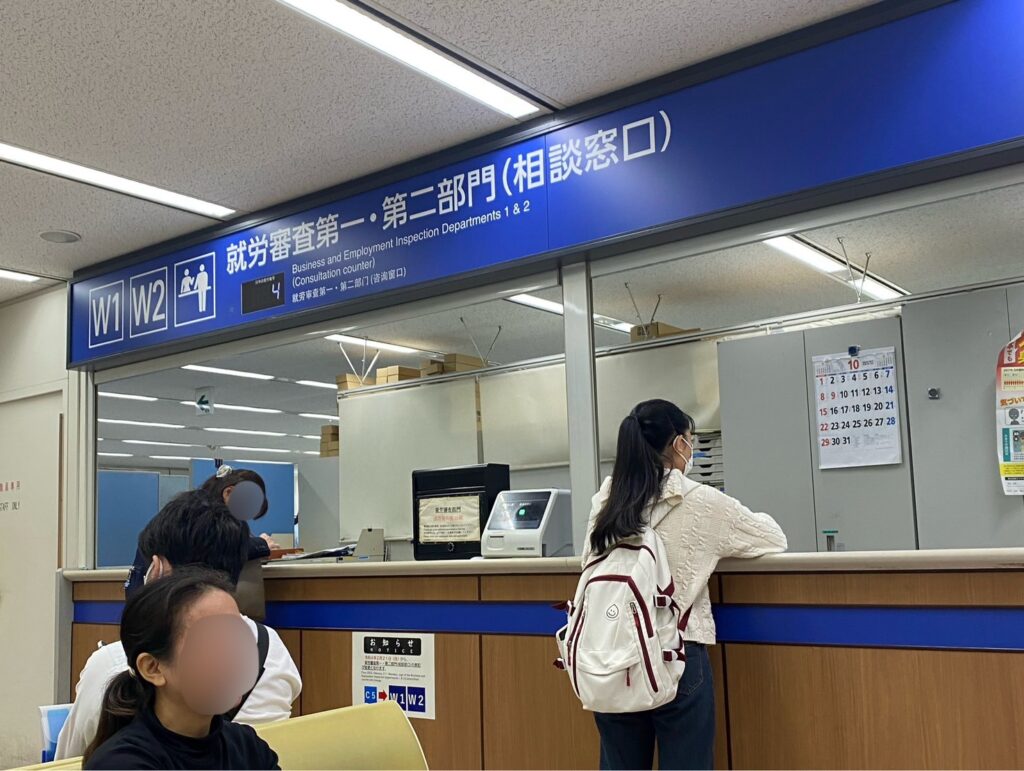
But because of his nationality (Argentina), we found out that he cannot change his visa from working holiday to work visa within Japan. We first tried to submit “Change of Status of Residence”(在留資格変更許可申請書)with all the documents prepared, but after one month, we received the rejection result from the Immigration office like below.
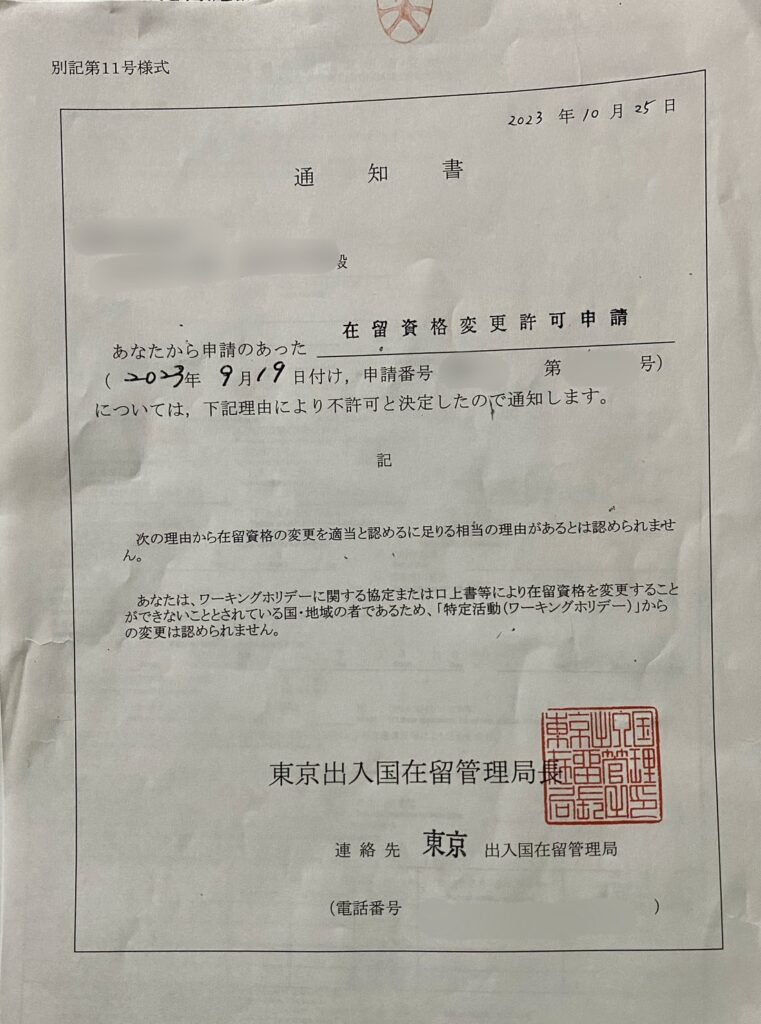
Since we didn’t know there is the bilateral agreements between Japan and Argentina (Not only Argentina, but also the countries above that leaving Japan is usually required), we were explained about the reason why his application was rejected at the Immigration office. It was a really good experience to know there is this kind of agreement which is not posted on the official website.
So what he had to do is to go through the full process of applying for a Certificate of Eligibility (CoE), wait for it to be approved while staying in touch with his company, and after two months, finally he could get his Certificate of Eligibility (CoE), and then return to Argentina to complete the Work Visa application from the Japanese embassy there. I remember it took some patience and was a stressful process, but eventually we’ve made it!
💡Please check my post about what documents are required for Certificate of Eligibility (CoE) in Japan.
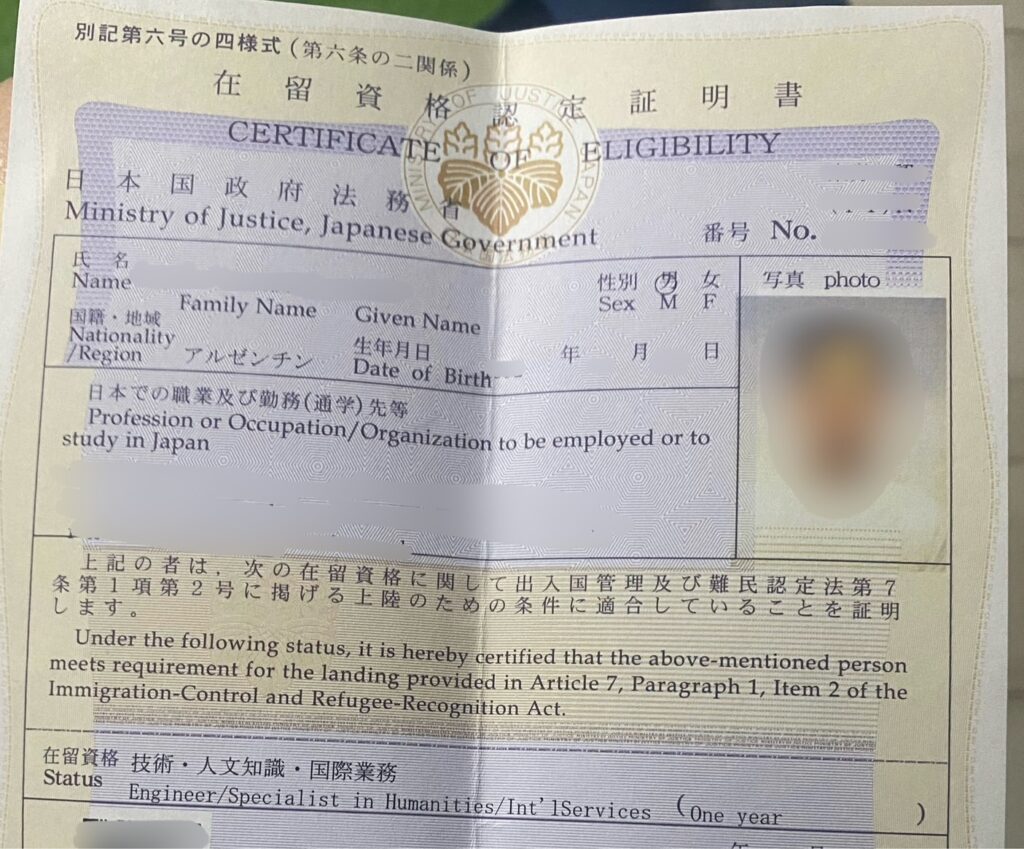
With the right paperwork and support from his employer, he could come back to Japan a few months later with a shiny 🌟 new Work Visa and started his new job full-time. The process wasn’t easy at all, but it worked out eventually—and knowing what to expect made a big difference.
🔗 Resources & Official Information
If you’re unsure about your country’s status or need official details, please check the official website below or consult with your local immigration office.
- Ministry of Foreign Affairs: Working Holiday Visa Information
- Immigration Services Agency: Visa Status Changes
✨ Final Thoughts and Summary
Switching from a Working Holiday visa to a Work Visa in Japan is definitely possible—but it depends on your nationality. If you’re planning to stay longer, make sure you know the process early, especially if you might have to temporarily leave Japan like my friend did.
Need help figuring out your own visa situation? Feel free to leave a comment or book a 30-minute chat—I’ve been through several visa process for myself and my friends and will be helpful for you. ☕💡

30-Min Coffee Chat – Japan Life Support
66% discount offer available now!
Need help navigating life in Japan? Book a 30-minute Coffee Chat with Mochi for practical and personalized advice — in English, Spanish, Japanese, or Korean.
 EN
EN  ES
ES