
How to Prepare for an Earthquake in Japan: Complete Guide
While living in Japan, you’ve probably felt at least one earthquake — maybe even a few, while working, cooking or commuting. I’ve experienced a few myself since living in Japan, and every time it reminds me how important it is to be prepared, even just a little. That’s why I decided to start this series on how to prepare for an earthquake in Japan! In this first post, we’ll focus on something simple but essential: preparing an earthquake emergency kit in Japan. I actually have my own earthquake emergency kit (also called survival bag or 災害バック(Saigai Bag) )prepared by myself from 5 years ago. I will help you figure out what to pack, where to get it (yes, even from Daiso!) and how to keep your kit ready.
- ✅ Vol.1: Build Your Emergency Kit👉This post
- ✅ Vol.2: Find Your Nearest Evacuation Point 👉Coming soon
- ✅ Vol.3: Check the Earthquake Hazard Map 👉Coming soon
- ✅ Vol.4: Set Up Alerts and Safety Apps 👉Coming soon
🎒 Why You Need an Earthquake Emergency Kit in Japan
Japan is one of the most earthquake-prone countries in the world. Small tremors are common, and once in a while, a larger one reminds us just how suddenly things can change. From the 2011 Great East Japan Earthquake to more recent local quakes, it’s clear that being unprepared can lead to unnecessary stress — or even danger. That’s why having an earthquake emergency kit in Japan is not just a “nice to have,” but an essential part of living here safely.
When I first moved to Japan, I didn’t think much about earthquake preparation. But after feeling a few quakes — even small ones — I realized how quickly things can get confusing. Shops close, transportation stops, and the electricity might go out. I’ve since talked to many local friends and coworkers, and most of them have some kind of emergency kit ready. It’s common in Japanese homes to keep water, food, and basic supplies on hand — even in small apartments.
If you’re living in Japan, building your own earthquake emergency kit is a way to take responsibility for your safety. It doesn’t have to be expensive or perfect right away. You can start with a few essentials and add to it little by little. In this post, I’ll walk you through what you need, why each item matters, and where you can get them — whether online or at places like Daiso. Let’s make sure you’re not caught off guard.
❓ Where to Buy an Earthquake Emergency Kit in Japan
You have two main options when preparing your earthquake emergency kit in Japan: buy a ready-made kit online or build your own from individual items. Websites like Amazon or Rakuten offer a wide range of pre-assembled kits, which can be a convenient option if you want to prepare quickly. These kits usually include essentials like food, water, a flashlight, and a first-aid set — but the quality and contents vary, so it’s good to check the reviews before buying.
🛒 Amazon Japan
If you search Amazon with the keyword like ‘Earthquake emergency kit’ or ‘災害バック’, there are a lot of great ready-to-go products available like below.
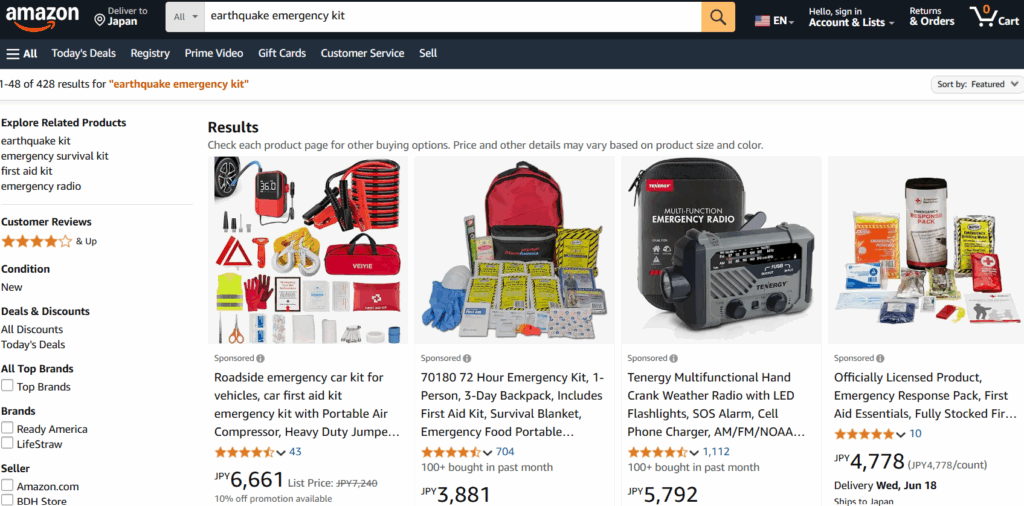
They often include everything from food to gloves, blankets and even portable toilets. It can be very convenient option, but it’s usually more expensive than you buy each item by yourself and unnecessary things that you might not use.
🏪 Daiso / 100-yen Shops
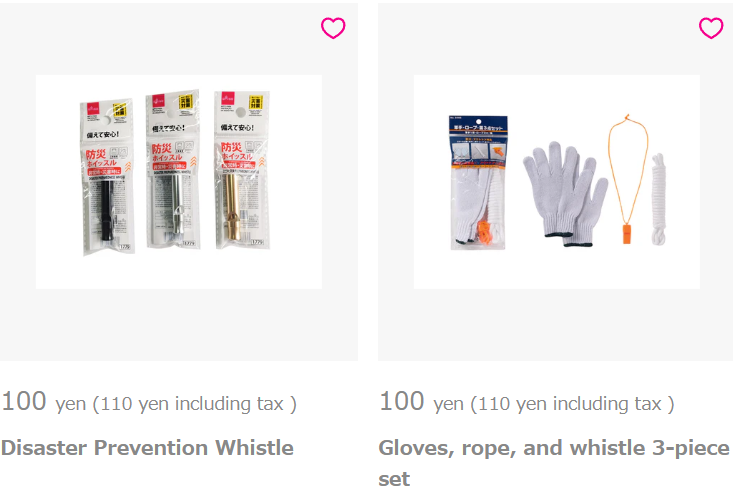
To save your budget to prepare your own earthquake emergency kit in Japan or customize your kit, you can actually find most of the basic items at Daiso. I actually prepared my survival bag with Daiso products! (Only helmet is from Amazon) All I did was to visit and check the disaster prevention section in Daiso.
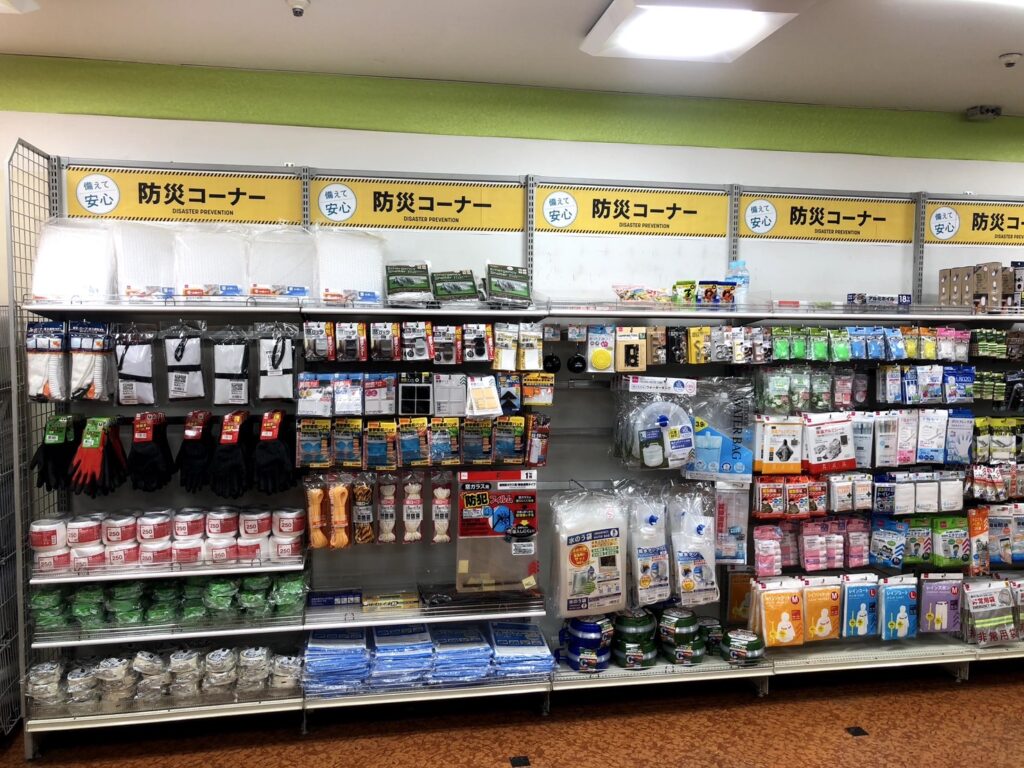
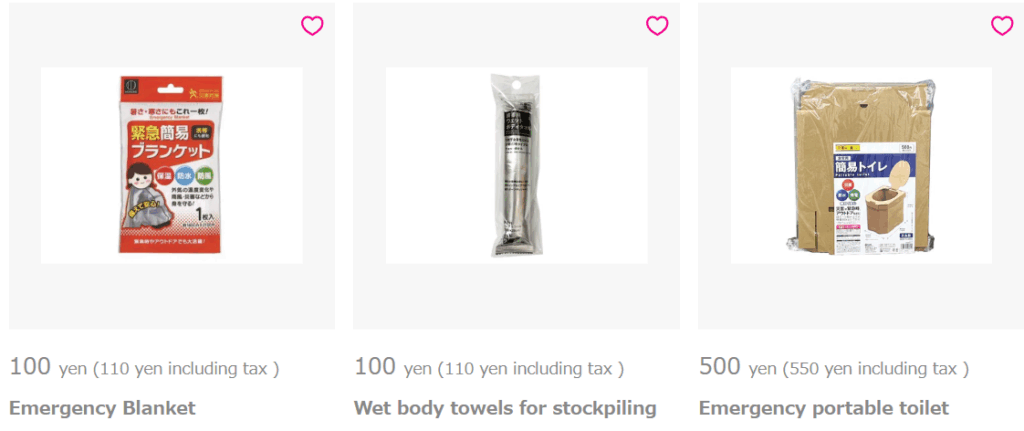
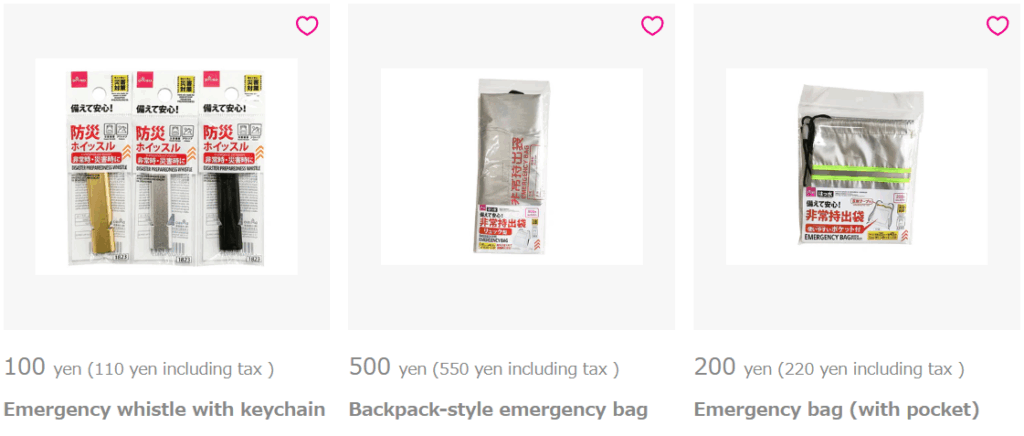
When I visited my local Daiso, I was so surprised to find a lot of disaster prevention products there, not just flashlights and water bottles, but also emergency blankets, portable toilets, and even compact first-aid kits! They had a whole section dedicated to disaster preparedness, and the most of the products are just 100-yen. It’s a very good place to start if you want to build a budget-friendly earthquake emergency kit in Japan by yourself.
📌 What to Include in Your Earthquake Emergency Kit in Japan
So what exactly should go in your kit? Whether you’re buying a pre-made earthquake emergency kit in Japan from Amazon or picking up items one by one at Daiso, the basics are the same.
This list below covers the essential items you’ll need to stay safe and comfortable for at least the first 1-2 days after a major earthquake. Please use it as a checklist when shopping or reviewing your current earthquake emergency kit!
🛠️ Basic Essentials
| Item | Why it’s important |
| Drinking water (At least 1-2L) | Water supply may be cut off after a big earthquake. Having clean water can be critical for survival, even in the first 24 hours. |
| Non-perishable food (like energy bars, canned goods) | Access to supermarkets or convenience stores may be limited. Or there will be no stocks in the emergency situation. Having some food stocks will help you while waiting for help or recovery. |
| Flashlight + extra batteries | Earthquakes often cause power outages. A flashlight ensures you can move safely in the dart and avoid injury. |
| Portable phone charger | In case of power outages, it will help your electric devices keep power on, stay in touch or access emergency information online. |
| First-aid kit | Injuries are common during and after earthquakes. Having some bandages and basic care can prevent infections and complications. |
| Helmet | Protects your head from falling objects during aftershocks or while evacuating through unstable areas. Especially important in older buildings. |
| Rope | Can be used for basic rescue, securing items, or even creating a makeshift shelter. Versatile and lightweight but very practical. |
These are the absolute basics every earthquake survival bag should have.
🧍 Personal Items
| Item | Why it’s important |
| Passport, copies of ID and residence card | Identification may be needed at evacuation centers, hospitals, or if official support is required. Carrying copies of your ID protects you if originals are lost. |
| Cash (in small bills) | ATMs and card systems may not work due to power or network outages. Cash allows you to buy food or supplies when electronic payments fail. |
| Spare glasses or contact lenses | Losing your only pair during an evacuation can make it difficult to move safely or read important information. |
| Toilet paper, wet wipes, sanitary items | Hygiene conditions in shelters can be poor. These items help maintain cleanliness and comfort. |
| Some medicine/medication | Pharmacies may be closed, and emergency services may be delayed. Keeping a few days’ worth of medication ensures you stay stable. |
🌤️ Seasonal Extras
| Item | Why it’s important |
| Light rainwear or poncho | If you have to evacuate in bad weather, a poncho keeps you dry and reduces the risk of getting sick. |
| Mask and gloves | Protect against airborne dust, germs, or illness in crowded shelters or on your way there. |
| Small towel or blanket | Offers warmth at night or cushioning if you need to sleep on a hard floor. It also brings a small sense of comfort in an unfamiliar situation. |
| Heat packs (winter) | Shelters may not have heating. Heat packs help prevent hypothermia and keep your body warm. |
🧳 What I Keep in My Own Earthquake Emergency Kit
When I started preparing my earthquake emergency kit in Japan, I felt unsure what to include. So I began with the essentials and added more over time, so I recommend you to start as soon as possible. I found that using both Amazon and Daiso worked well — In my case, I didn’t buy the ready-to-go survival bag and I made it by myself, using Amazon for more durable or hard-to-find gear, and Daiso for affordable, everyday items.
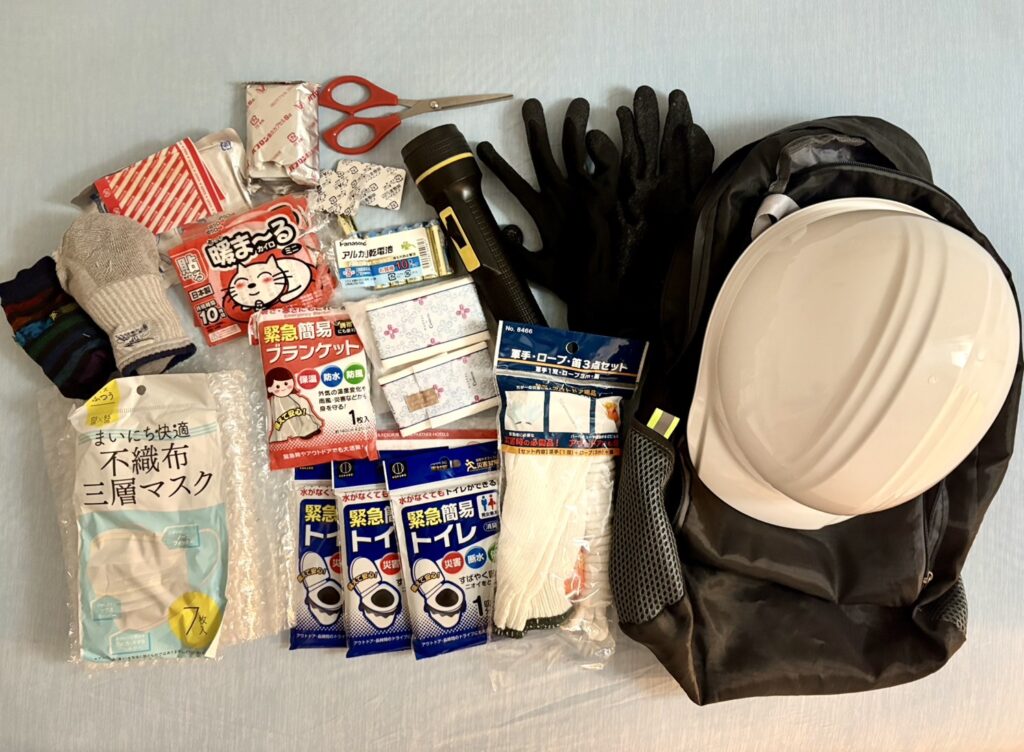
🛒 From Amazon, I got:
- ⛑️ An emergency helmet
- 🎒 A portable phone charger
💴 From Daiso, I picked up:
- 🧻 Wet wipes and a mini toilet kit
- 🩹 A basic first-aid set
- ❄️ Heat packs for winter
- 📢 A set of rope, whistle and glove
- 🛌 An emergency blanket
- Some chocolates and small energy bar (only costs 100 yen for 2 or 3)
I also added:
- 💳 Photocopies of my passport & residence card
- 💰 A small pouch of cash in ¥1000 notes and coins
Final Thoughts
Building your own earthquake emergency kit in Japan might seem overwhelming at first, but it’s one of the most important steps you can take to protect yourself. In this post, we looked at where to buy items (from Amazon to Daiso), what to include, and why each item matters. Whether you buy a ready-made set or build your own from scratch, the key is to start! — even a small kit is better than none.
You don’t need to panic or spend a lot all at once. Start small, personalize your kit, and build it over time. It’s a way of taking care of yourself and the people around you — just like many locals do. Stay safe, stay ready!
If you have any question about living in Japan, please check ☕coffee chat with me for 1-on-1 help, or check out my other posts for more practical tips on navigating life and work in Japan!

30-Min Coffee Chat – Japan Life Support
66% discount offer available now!
Need help navigating life in Japan? Book a 30-minute Coffee Chat with Mochi for practical and personalized advice — in English, Spanish, Japanese, or Korean.
 EN
EN  ES
ES