

📌Introduction: How to Pass Resume Screening for AWS or Microsoft Japan
If you’re a non-Japanese professional trying to land a job at big tech companies in Japan, like AWS, Microsoft, IBM, Oracle, Accenture or EY, you might feel overwhelmed at first. What should your resume look like? Should it be in Japanese or English? What experiences should you highlight? I’ve been there—and after successfully passing multiple screenings, I’m sharing everything that worked about how to pass resume screening for AWS or Microsoft Japan, or any other global companies in Japan.
Through this post, I want to share you how I approached the job hunt, what kind of resume I used, and what the job application process was like. These insights are based on my real experience last year (2024) with the global big techs in Japan, such as:
- AWS (Amazon Web Services)
- Microsoft
- IBM
- and other global consulting firms (EY, Accenture) in Japan.
If you’re looking for even more actionable guidance—like detailed writing examples and checklists—please don’t miss the free resume template and premium e-book packed with proven strategies and editable templates at the bottom!
1. Understanding the Japanese Big Tech Hiring Context
When I first started applying to global big tech companies in Japan, I wasn’t sure what to expect. Based on the job description, some roles asked for a Japanese resume (it’s called 履歴書, Rirekisho), others didn’t. I applied to both English-speaking and bilingual roles, and what I found was that global tech companies in Japan have more flexibility than traditional Japanese firms—but still, many positions required Japanese proficiency.
In some companies, especially when their end clients are Japanese, the hiring process and daily work require strong Japanese skills. However, for certain roles—like software development, backend systems, or internal IT platforms—all communication is in English from start to finish. The language expectations can vary a lot depending on the team and role, so it’s very important to check your role or position first. Please check the tips below!
💡Tips:
- Most tech roles in Japan accept English resumes, especially at companies like AWS or Microsoft.
- Keep a short Japanese self-introduction ready just in case.
- Confirm the language requirements for each role; it’s usually written in the job description.
- Focus more on clarity and relevance than formatting like a traditional Japanese rirekisho.
2. How I Passed Resume Screening for AWS, Microsoft & IBM Japan
While preparing my resume for global big techs in Japan (AWS, Microsoft and IBM), I tried to create a simple, one-page English resume for each application. My goal was to make it easy for recruiters to see my strengths at a glance. I also made a separate two-page of 職務経歴書 (Shokumukeirekisho) to give more context where needed. (Please check Chapter 5 for more about Shokumukeirekisho.)
What helped most was highlighting measurable results. I used bullet points to show how my past experience would add value, like improving efficiency, cutting costs, or launching new tools. For Japanese-speaking roles, I also included my proficiency level of Japanese (such as JLPT level) and Japanese summary of my career history.
💡Tips for preparing resume to pass resume screening
- Include tools and technologies relevant to the role (e.g., AWS, Python, Docker) and how much qualified you are
- Quantify your results whenever possible (e.g., “Reduced system downtime by 30%”)
- Keep it 1–2 pages max; avoid long paragraphs
3. The Real Application Process based on my experience with AWS & Microsoft Japan
Let me share how I got through the screening process with AWS and Microsoft Japan.
Basically, I started contacting with the AWS/Microsoft recruiter through LinkedIn. The recruiters of big techs often send scout messages (for example, “It seems you are matched to our role in AWS/Microsoft, are you interested to have a casual chat?”) or webinar invitation (for example, “We would like to invite you to our webinar, are you interested?”) via LinkedIn. So it’s very important to create your LinkedIn account, post all your professional backgrounds, follow your dream companies (such as, Google, Amazon, Accenture or any!) and always keep your profile updated.
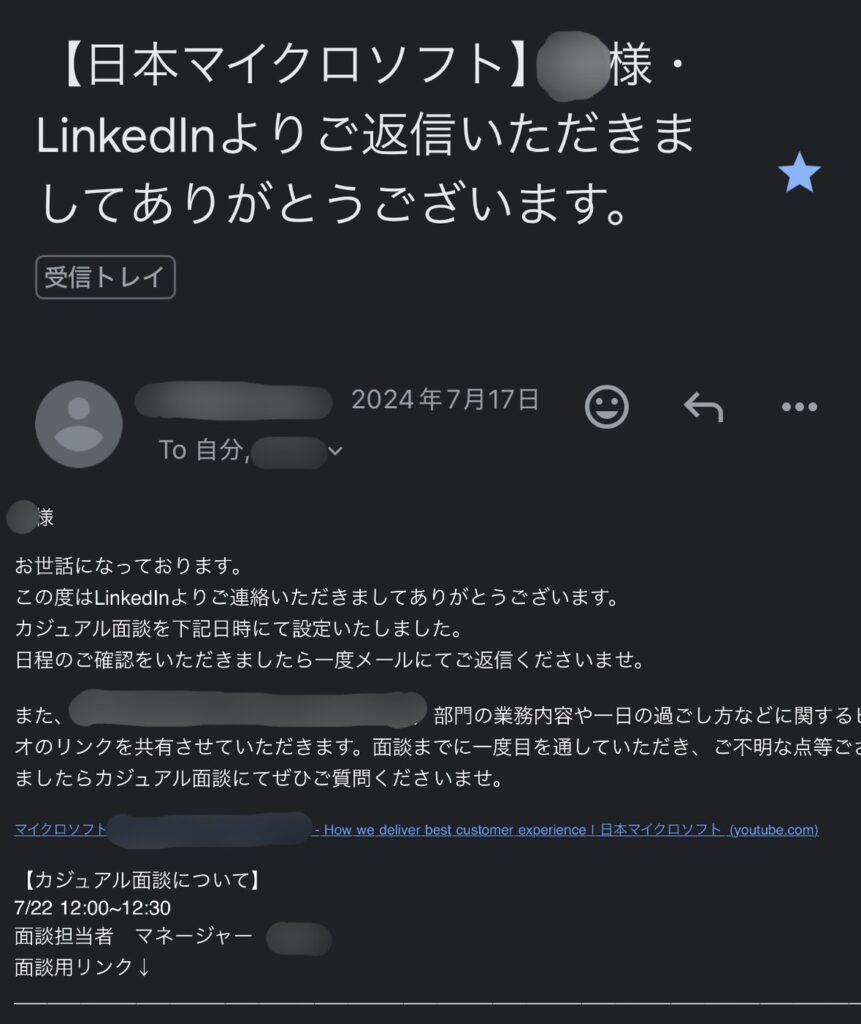
In the case of AWS and Microsoft Japan, I received a scout message from the recruiter recommending a position that matches my experience. I replied them, and they adjusted a casual online meeting with the recruiter. During the casual online meeting, the recruiter explained the company, environment, the role that they are hiring, work condition, and other details very nicely, and they asked my opinion if I want to proceed or not.
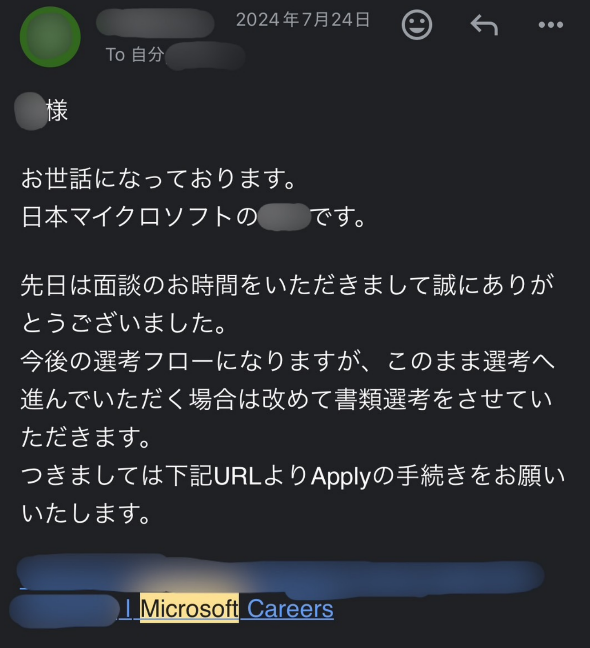
Once I replied I want to proceed, they guide me to apply through their career website (for example, Microsoft Careers or Amazon Jobs). Since the recruiter already checked you “probably” matches the position, the possibility of your resume being checked might be much higher than when you simply apply through the career websites by yourself. Usually 2-4 days later, you will get the email like below once you pass the screening!
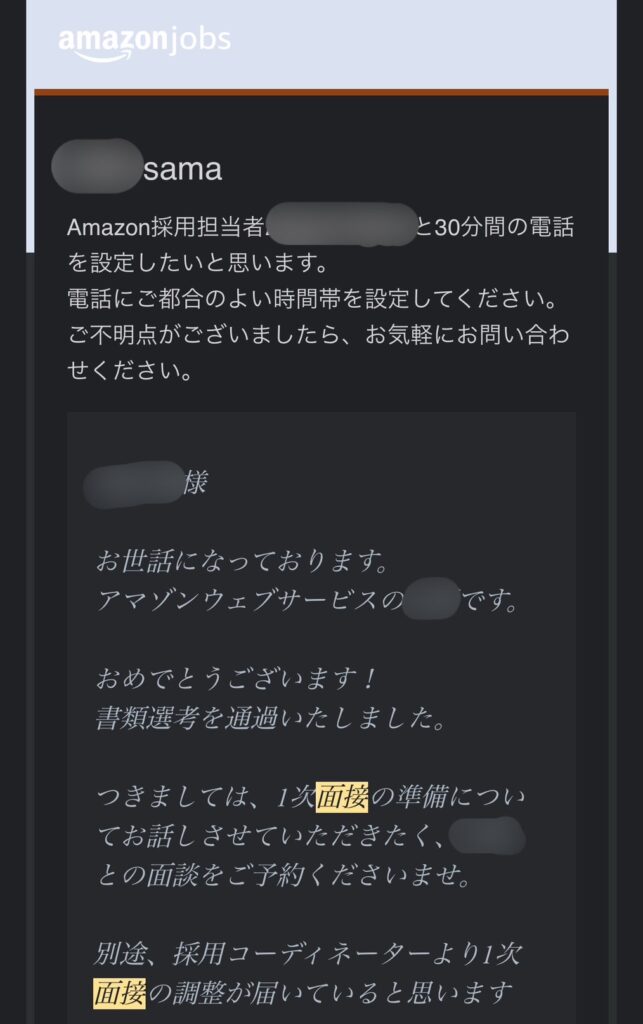
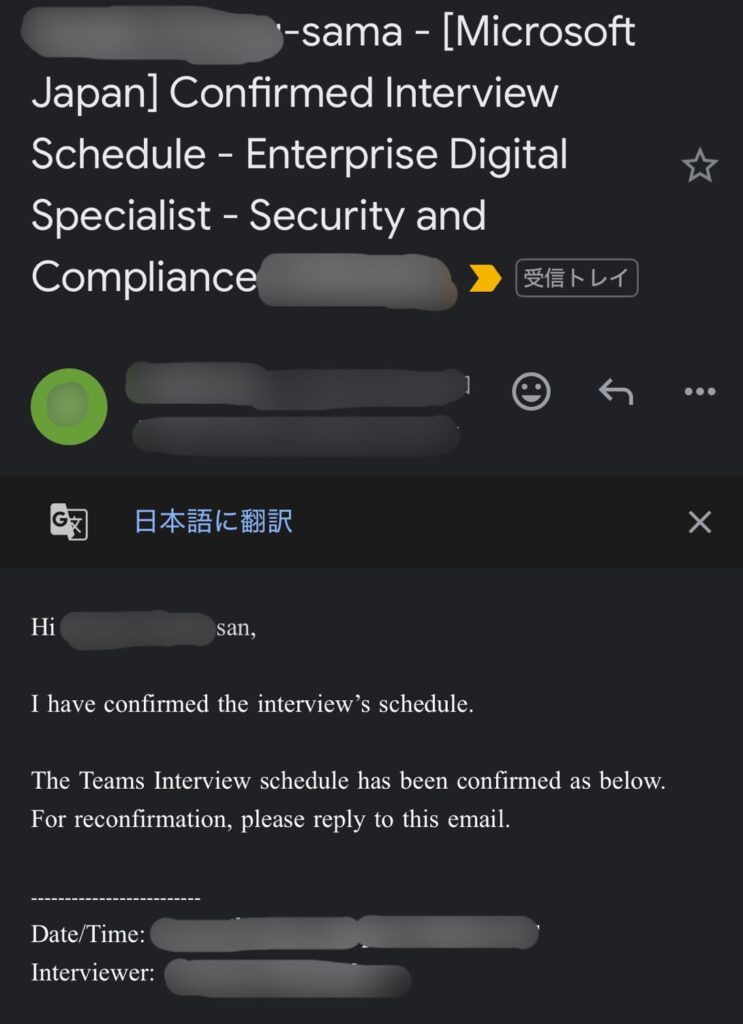
Each step with the recruiters was very friendly and professional—and in this case, casual chat and communications were sometimes in English, and sometimes in Japanese. It totally depends on the recruiters and the positions that you apply for.
💡Tips for How to Pass Resume Screening for AWS or Microsoft Japan:
- Apply via LinkedIn or company career pages; Or if you have some friends who work in those companies, referrals help a lot
- Be ready to explain your resume and past experience in detail
- Practice system design or coding problems, especially for technical roles
- Ask upfront about language expectations during the screening call
4. Common Mistakes Foreigners Make + Resume Style Comparison
Looking back, I made several mistakes early on. One of them was using a Japanese-style resume for roles that were clearly international. Another was being too modest—I didn’t highlight my achievements enough.😅
Some friends of mine also ran into issues because they skipped important information like language ability or tech stack. You don’t have to be fluent in Japanese, but if the role requires it, it’s good to be honest and prepared.
Here’s a quick comparison of the typical Japanese-style resume (履歴書, Rirekisho) vs. an English resume:
| Section | Japanese Resume (Rirekisho) | English Resume |
|---|---|---|
| Personal Info | Includes photo, date of birth, address | Name, contact info only (no photo or DOB) |
| Objective | Fixed format with simple career goal | Optional, more flexible summary section |
| Education & Work | Listed in chronological order, no details | Reverse-chronological with achievements |
| Skills & Projects | Rarely included | Key section, especially for tech roles |
| Length | Typically 1 page, standardized format | 1–2 pages, content-focused |
| Language | Japanese | English or both, depending on the role |
Also, for mid-career positions (if you have more than 2-3 years of related job experience), the Shokumukeirekisho(職務経歴書) is usually required. About Shokumukeirekisho(職務経歴書), please check the Chapter 5.
💡Tips for writing Japanese Resume (Rirekisho) as a foreigner applicant:
- No need to use a Japanese format unless the job specifically asks for it
- Avoid writing too much; be concise and result-oriented
- Include your Japanese level (e.g., JLPT N3) even if it’s still a work in progress
5. What Is a Shokumukeirekisho (職務経歴書)?
The Shokumukeirekisho is a Japanese-style career summary used for mid-career positions. It provides detailed information about your work history, accomplishments, and skills—similar to an English resume.
Standard sections include:
- Career Summary (職務要約)
- Employment History (会社名、職種、期間、業務内容)
- Skills & Tools
- Achievements / Projects
- Motivation (志望動機)
🛠 Want to learn how to phrase your summary and highlight achievements effectively? My e-book walks you through real examples and templates you can reuse. Please check chapter 6 and 7.
💡Tips for writing the successful Shokumukeirekisho:
- Highlight total years of experience and strengths in your summary
- Use bullet points and metrics in work history
- Keep formatting clean and avoid over-design
6. (Free) Download My Resume & Career Summary Template
I know how much time it takes to figure this all out, so I’m sharing the exact resume and Shokumukeirekisho format that I submitted for the screening process at several global tech companies in Japan. You can download and customize it for your own applications. It will give you a clear action plan of how to pass resume screening for AWS or Microsoft Japan, or any other global companies in Japan!
⸻
7. What You’ll Get in the Premium E-Book
If you found this post helpful and want more actionable guidance, my premium e-book is packed with deeper insights and practical tools:
📘 Inside the e-book, you’ll find:
- ✅ Actual resumes and 職務経歴書 that passed screenings (with annotations)
- ✅ Professionally designed, editable templates (English & Japanese)
- ✅ A complete checklist for job application success in Japan
- ✅ Advice tailored for cloud, backend, bilingual, and consulting roles
- ✅ Sample recruiter messages that got replies
- ✅ Tips on writing your 自己PR and 志望動機 in a Japanese-style resume
- ✅ Common rejection reasons—and how to fix them
🧭 This guide will save you hours of guesswork and give you clarity on what top-tier companies in Japan are actually looking for. Perfect for foreign engineers, consultants, or professionals transitioning into Japan’s global tech market.
👉 Check here!
⸻
8. Final Thoughts: How to Pass Resume Screening for AWS or Microsoft Japan
Finding a job in Japan’s big tech industry as a foreigner is totally possible. I’ve done it, and so can you! The key is to understand what companies are really looking for: clear communication, relevant experience, and the ability to fit into a global team.
Some roles require Japanese, some don’t. Don’t let that discourage you—take time to find the roles that match your strengths, and keep improving. And if you need help along the way, feel free to reach out.
If you want some personalized guidance, please book a ☕coffee chat with me for 1-on-1 help, or check out my other posts for more practical tips on navigating life and work in Japan!

30-Min Coffee Chat – Japan Life Support
66% discount offer available now!
Need help navigating life in Japan? Book a 30-minute Coffee Chat with Mochi for practical and personalized advice — in English, Spanish, Japanese, or Korean.
 EN
EN  ES
ES